Homeowners often use the phrase pressure washing to describe any exterior cleaning, but a roof should not automatically be treated like a driveway. Many roofing materials can be damaged by aggressive water pressure, and working on a roof introduces additional safety concerns. Professional roof washing generally relies on a gentler, surface-appropriate process designed to address organic growth and staining without unnecessary force.
Why Can High Pressure Be Risky on a Roof?
Roofing systems are designed to shed weather, not to withstand a concentrated stream of high-pressure water at close range. Excessive pressure can disturb granules, coatings, seals, flashing, or other components depending on the roofing material and its condition.
Water can also be driven under shingles or into vulnerable areas around vents and edges.
What Are Those Dark Streaks and Patches on the Roof?
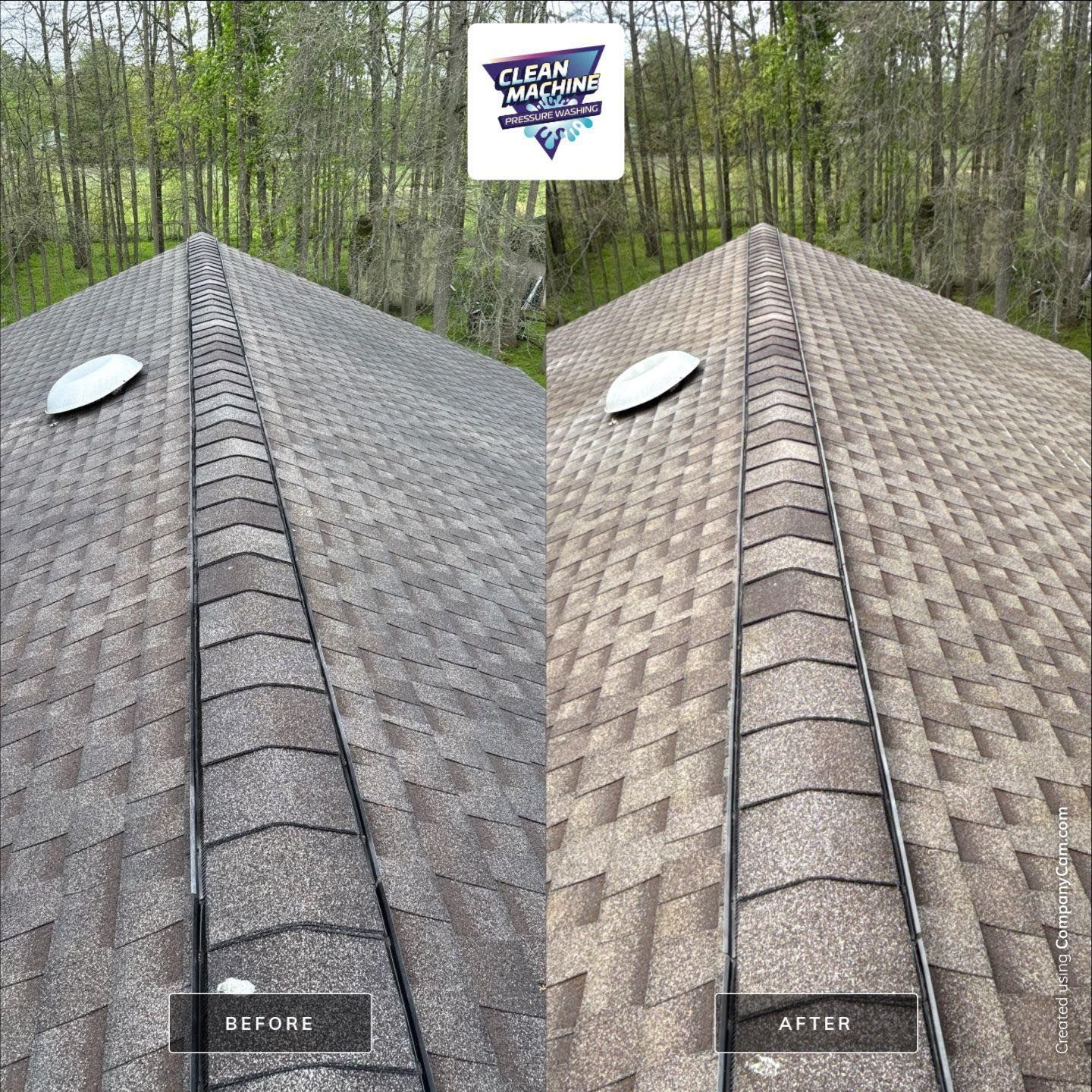
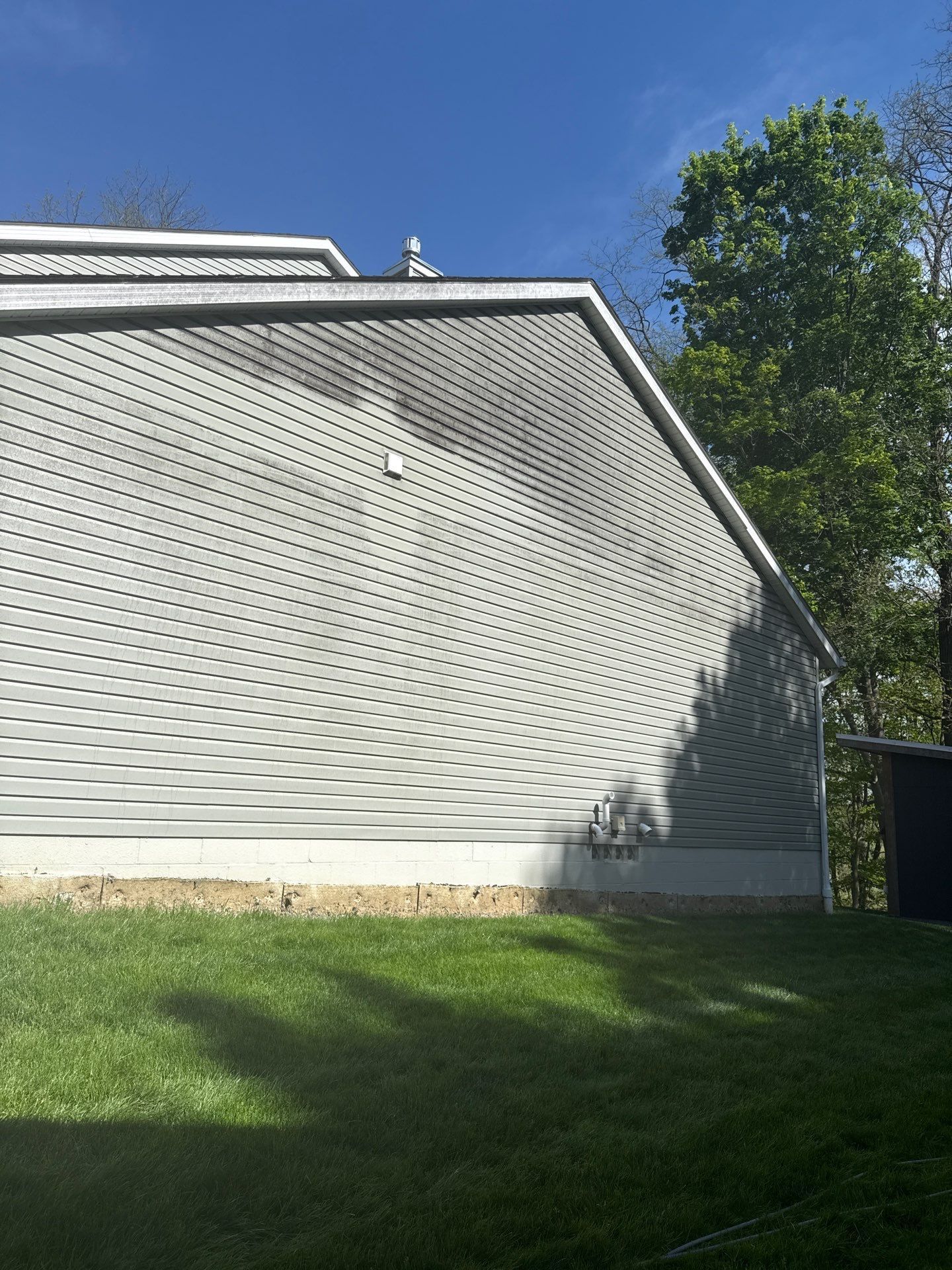
Dark streaks, green patches, moss, lichen, dirt, and debris can all create discoloration on a roof. The exact cause varies by property. Shade, overhanging trees, moisture, and areas that dry slowly can encourage organic growth.
Cleaning may improve organic discoloration, but it does not repair worn shingles, damaged flashing, leaks, or other roofing problems.
How Is a Roof Cleaned Without Aggressive Pressure?
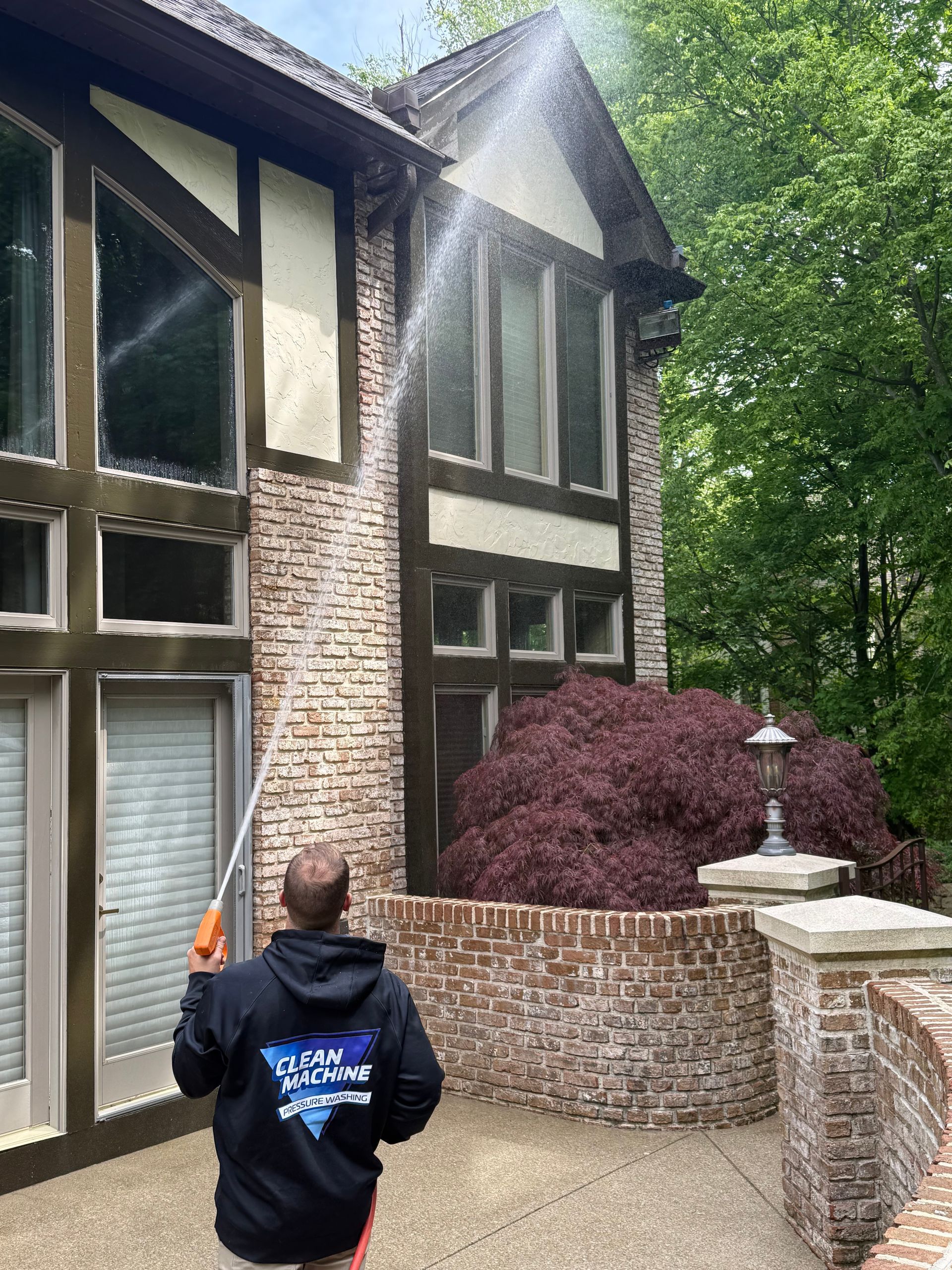
Professional roof cleaning often uses a lower-pressure application with an appropriate cleaning solution, followed by controlled rinsing or natural weathering depending on the method and roofing material. The goal is to treat buildup without relying on a narrow, forceful spray.
What Signs Suggest a Roof May Benefit From Cleaning?
Visible black streaks, moss, green organic growth, or uneven discoloration can be reasons to have the roof evaluated for cleaning. If shingles are curling, missing, brittle, leaking, or otherwise deteriorated, a roofing professional should evaluate the roof before exterior cleaning is considered.
When Should You Call a Professional Instead of Cleaning the Roof Yourself?
Roof work combines fall risk, water, cleaning solutions, and a surface that may already be slippery. Clean Machine Pressure Washing provides residential exterior cleaning services in Northeast Ohio and can evaluate whether roof washing is appropriate for the property.
How to Prepare for a Professional Roof Washing Appointment
Before a roof washing appointment, homeowners can help by making sure the contractor has clear access around the house and by moving vehicles, furniture, decorations, or other items away from likely work and runoff areas. Windows and doors should be closed, and pets should be kept inside while work is underway.
A professional should also evaluate the roof from the ground and from safe access points before cleaning. The condition of shingles, flashing, gutters, downspouts, nearby landscaping, electrical fixtures, solar equipment, and drainage paths can all affect how the job is approached. If the roof appears damaged or unsafe, cleaning may need to wait until a roofing professional has evaluated it.
Homeowners should expect roof cleaning to focus on treating organic buildup rather than blasting the roof with force. The exact appearance immediately afterward can vary by roof type and the kind of growth being treated, so the contractor should explain what results to expect and whether any remaining material will weather away gradually.
Frequently Asked Questions
Can pressure washing remove black streaks from a roof?
The streaks may respond to professional roof cleaning, but aggressive high pressure is not the preferred approach for many roofing materials. A gentler treatment is commonly used for organic staining. The roof’s age, shingle condition, flashing, gutters, nearby landscaping, and the cause of the discoloration should be evaluated first. Cleaning can improve appearance, but it should not be used as a substitute for repairs when the roofing system is damaged.
Is moss removal the same as roof washing?
They are related but not identical. Moss can require specific treatment and time to release from the roofing surface. Pulling or scraping it aggressively can create unnecessary damage. In many cases, the cleaning process is designed to treat the growth first and allow it to loosen gradually rather than forcing every visible piece off the roof immediately.
How often should a roof be cleaned?
There is no universal schedule. Shade, trees, moisture, roof material, age, and the rate at which organic growth returns all matter. Many homeowners simply inspect the roof from the ground once or twice a year and schedule cleaning when visible streaks, moss, or organic buildup becomes significant. A roof should not be cleaned on a fixed interval if it does not need it.