Black or dark streaks on a roof are commonly associated with organic growth, airborne debris, moisture, and areas that dry slowly. They can be especially noticeable on lighter-colored shingles and shaded roof slopes. Although cleaning can improve many types of organic discoloration, it is important to separate a cleaning issue from an actual roofing defect.
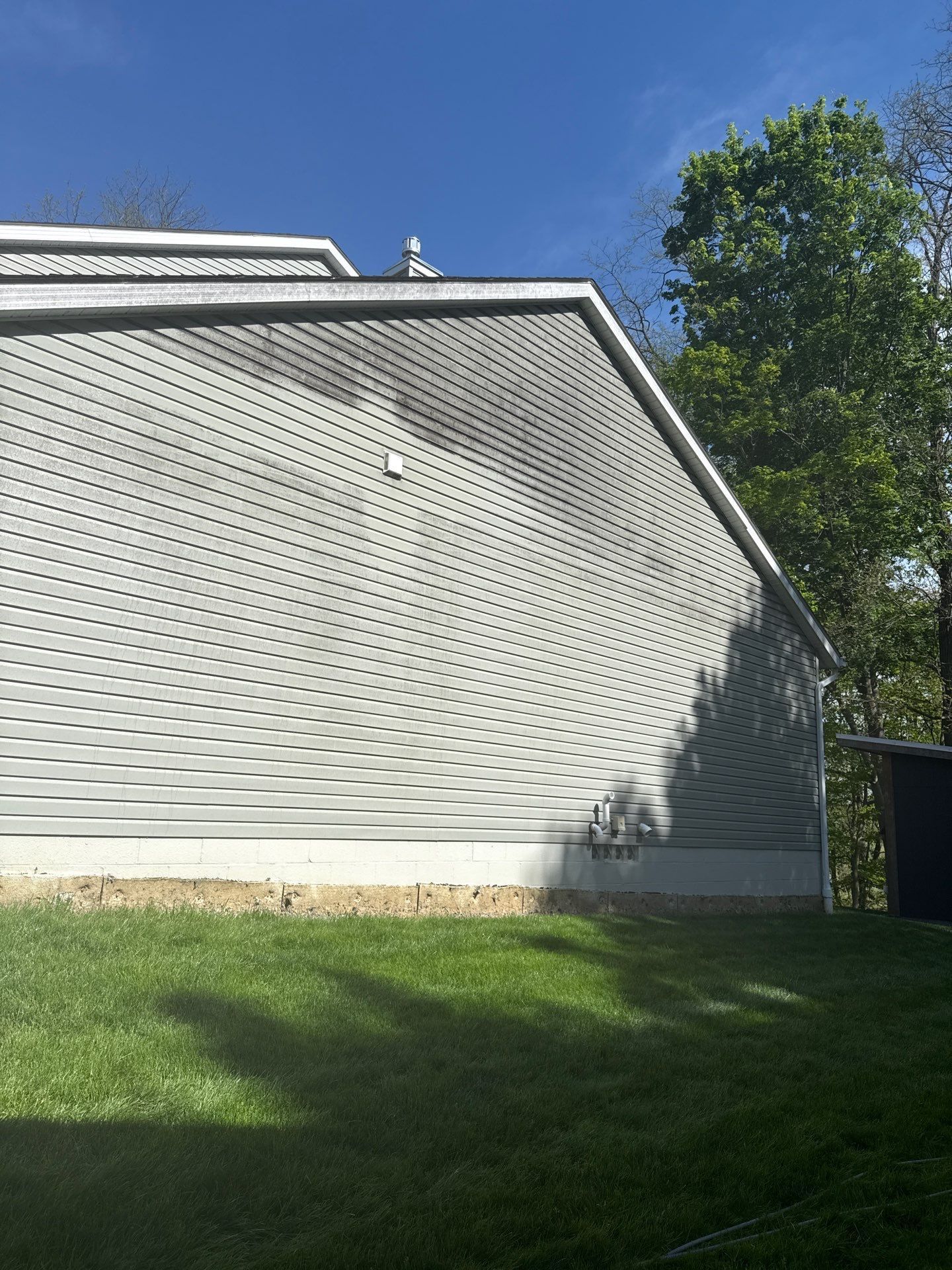
Why Do Black Roof Streaks Develop?
Roof surfaces collect airborne particles and organic material over time. When moisture lingers, certain types of algae and other growth can establish themselves and create dark streaking or patchy discoloration.
Tree cover, roof orientation, nearby vegetation, and drainage patterns can all influence where the streaks appear first.
Why Are Some Parts of the Roof Worse Than Others?
A shaded roof slope often stays damp longer than a section that receives direct sun. Valleys, areas below overhanging branches, and portions of the roof with slower drying conditions may therefore show staining sooner.
That uneven appearance is common and does not necessarily mean the roofing material is failing.
How Are Black Roof Streaks Cleaned?
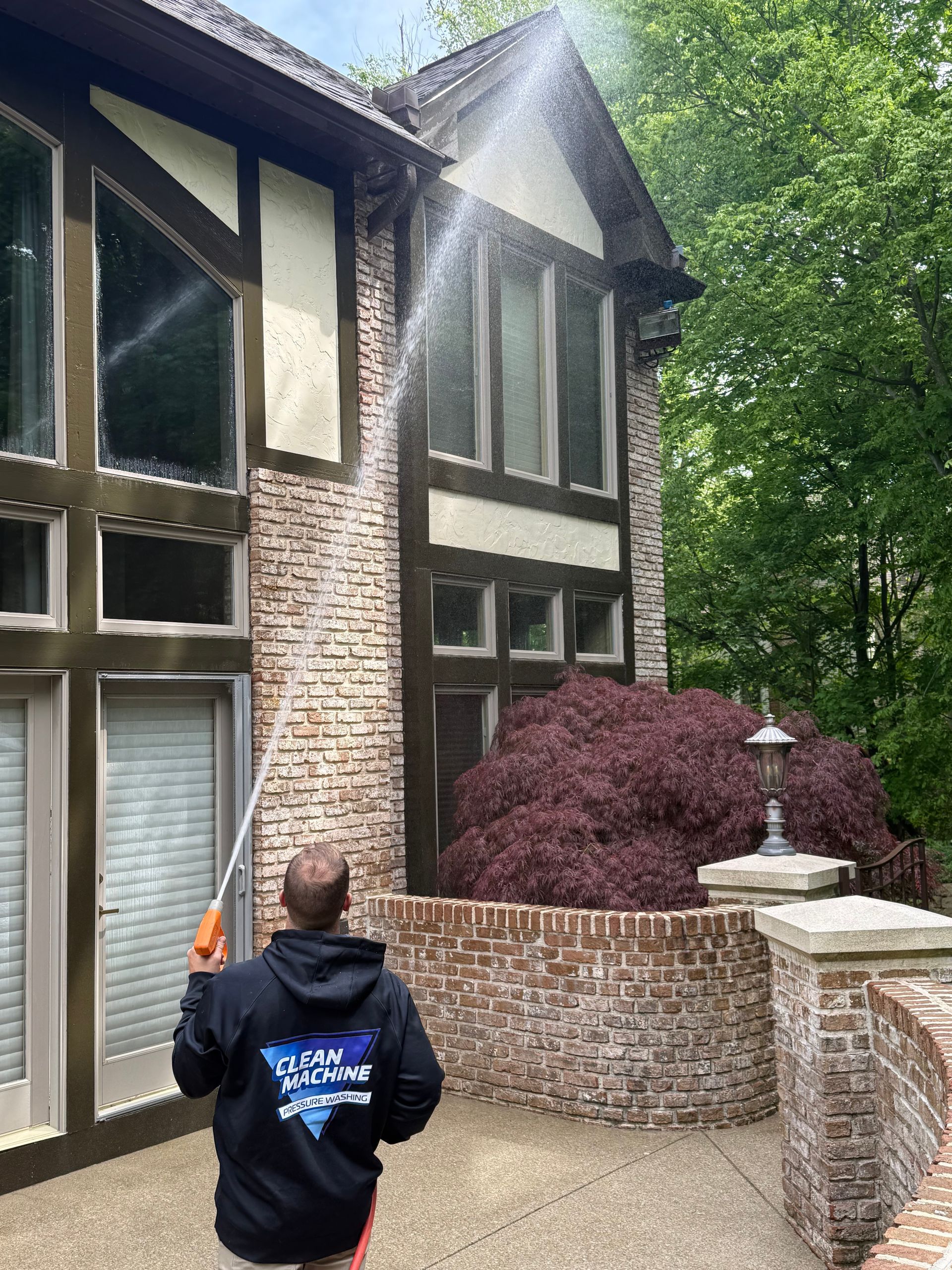
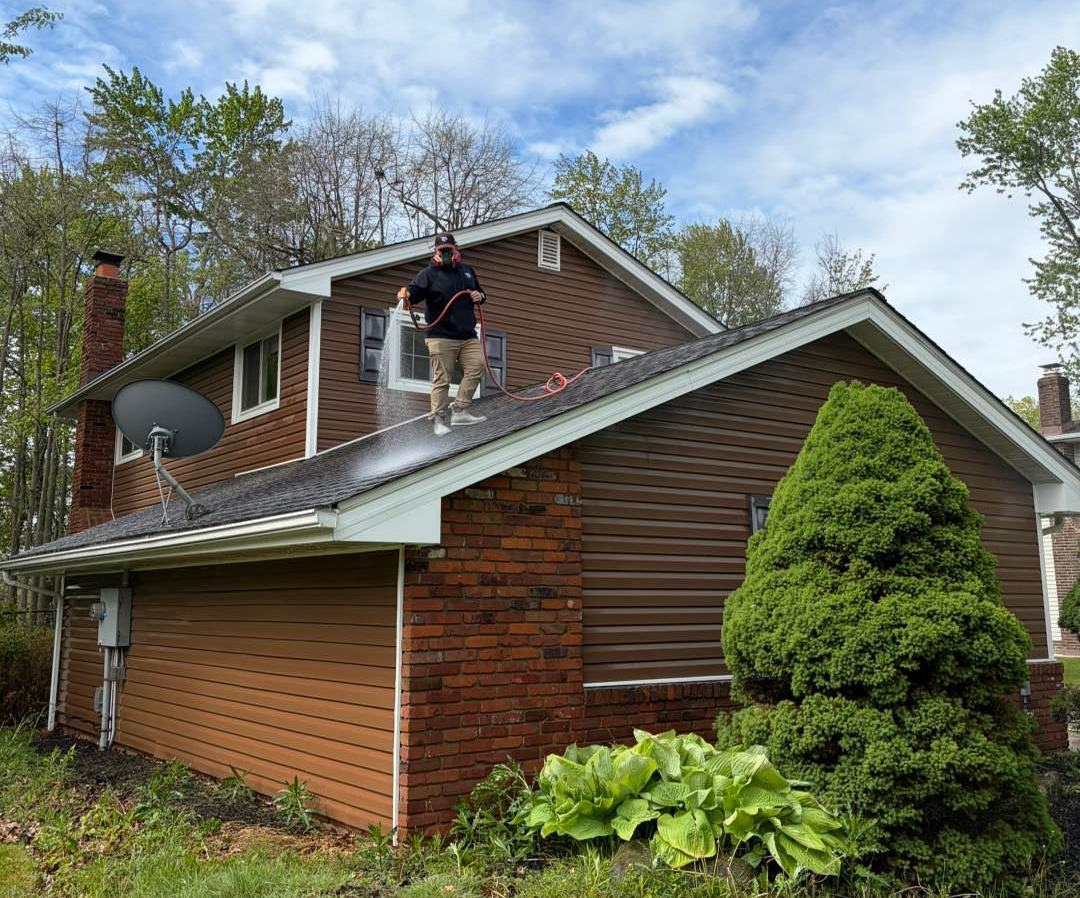
Professional roof washing generally uses a lower-pressure treatment appropriate for the roofing material rather than an aggressive high-pressure spray. The goal is to treat organic buildup while minimizing unnecessary wear on shingles, coatings, and surrounding materials.
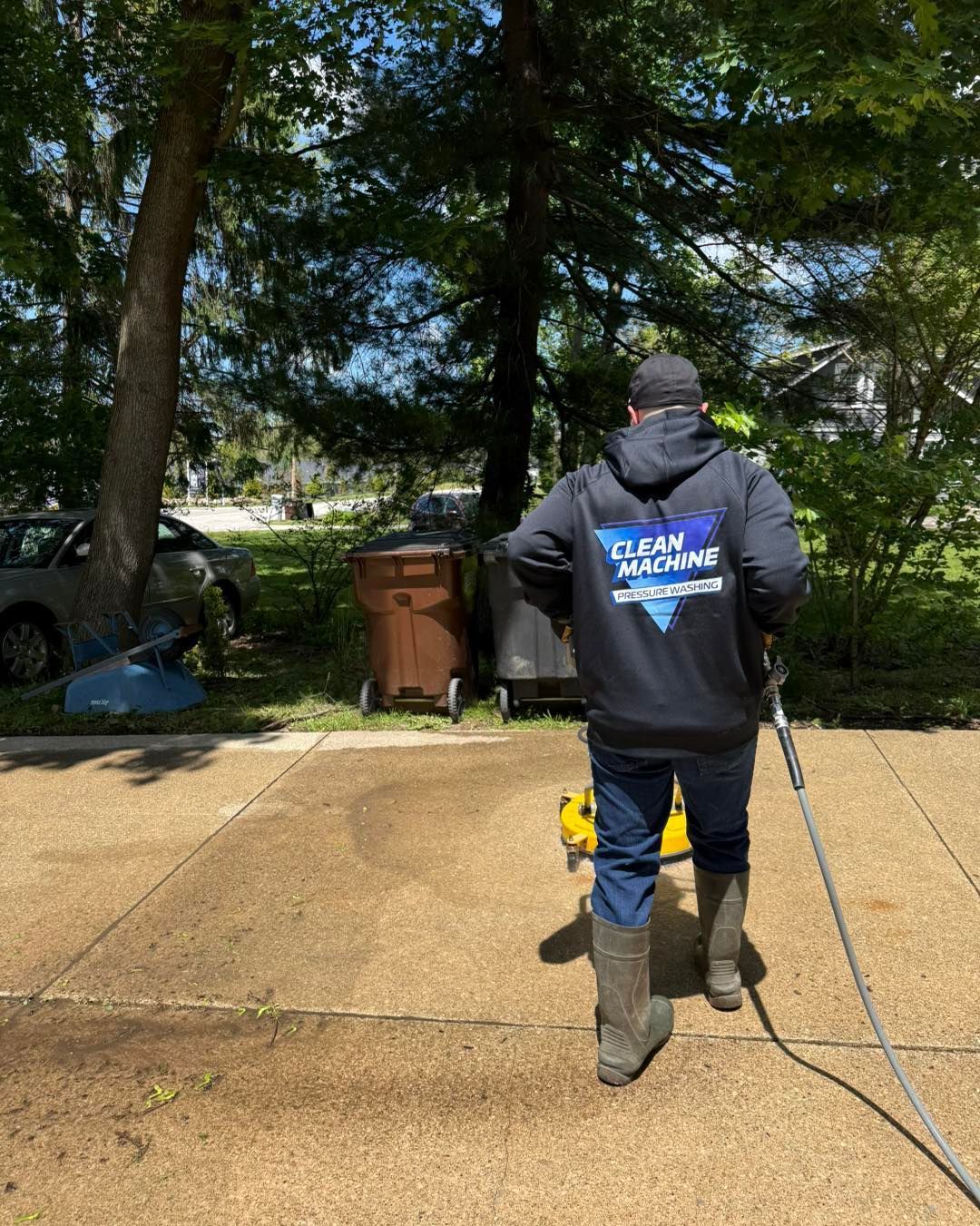
Clean Machine Pressure Washing provides residential exterior cleaning services that include roof washing and other surface-appropriate methods.
Why Should You Avoid Aggressive Scrubbing or High Pressure?
Forceful pressure or harsh mechanical scrubbing can disturb granules, coatings, seals, and edges depending on the roof type. Water can also be driven into areas it normally would not enter. Our guide on whether it is safe to pressure wash a roof explains why roofs need a different approach than concrete.
When Should Roof Streaks Be Evaluated Instead of Cleaned?
If discoloration is accompanied by missing shingles, curling, brittle material, active leaks, damaged flashing, or visible deterioration, a roofing professional should evaluate the roof. Cleaning can improve appearance, but it cannot correct structural or waterproofing problems.
How to Reduce the Conditions That Encourage Roof Streaks
Cleaning removes the visible streaking, but reducing the conditions that encourage recurring growth can help the roof stay cleaner longer. Overhanging branches that keep a roof shaded or drop heavy debris may be worth trimming when appropriate. Gutters should drain properly so water does not back up or repeatedly wet roof edges, fascia, and nearby surfaces.
It is also helpful to keep valleys and roof areas free of accumulated leaves and organic debris, provided that can be done safely. Debris can hold moisture against the roofing surface and slow drying after rain. Homeowners should avoid walking on the roof unnecessarily, especially when it is wet or already showing signs of wear.
Even with good maintenance, some roofs will develop streaks again because orientation, shade, tree cover, humidity, and airborne organic material cannot be eliminated. The goal is not to guarantee that growth never returns, but to recognize the conditions that make it happen faster and respond before the buildup becomes severe.
Frequently Asked Questions
Are black roof streaks always mold?
No. Dark roof discoloration can have several causes, including algae, dirt, debris, moisture-related growth, or aging. A visual evaluation helps determine whether cleaning is appropriate. Streaking caused by organic growth may respond well to professional treatment, while discoloration related to worn shingles, damaged roofing, or material aging will not be fixed by washing alone.
Will roof washing make an old roof new again?
No. Cleaning can improve organic staining and appearance, but it does not restore worn shingles or repair roofing damage. After cleaning, faded color, granule loss, curling shingles, or age-related wear may still be visible. Those are roofing conditions rather than cleaning issues and should be evaluated separately when necessary.
Can I scrub moss off shingles?
Aggressive scraping or scrubbing can damage some roofing materials. Moss should be treated with a method appropriate for the roof and allowed to release without unnecessary force. Because roof surfaces are also slippery and elevated, homeowners should avoid climbing up simply to remove visible growth. A professional can evaluate both the roofing condition and the safest cleaning method.